Not all magnesium supplements help with sleep. Magnesium glycinate is the most effective form for relaxation and sleep quality. Here's what the research shows.
Magnesium plays a role in over 300 enzymatic reactions in the body, including those that regulate your nervous system and sleep. But not all forms of magnesium are equally effective for sleep support. Magnesium glycinate stands out as the preferred form for relaxation and sleep quality, thanks to its superior absorption and calming properties.
Why Magnesium Matters for Sleep
Magnesium is essential for sleep through several mechanisms. It activates the parasympathetic nervous system — the "rest and digest" mode that prepares your body for sleep. It regulates GABA (gamma-aminobutyric acid), the neurotransmitter that calms neural activity. It helps regulate melatonin, your body's sleep-timing hormone. And it relaxes muscles, reducing physical tension that can keep you awake. Research published in the Journal of Research in Medical Sciences found that magnesium supplementation significantly improved subjective measures of insomnia, sleep efficiency, and sleep onset latency in elderly participants (Abbasi et al., 2012). Despite its importance, an estimated 50% of Americans don't get enough magnesium from diet alone, making supplementation a practical consideration.
Magnesium Glycinate — Best for Sleep and Calm
Magnesium glycinate is magnesium bound to the amino acid glycine. This chelated form offers two distinct advantages. First, the glycinate chelation makes it highly bioavailable — your body absorbs significantly more compared to cheaper forms like oxide. Second, glycine itself has calming properties. Research shows glycine can improve subjective sleep quality and reduce daytime sleepiness (Bannai & Kawai, 2012). The combination of well-absorbed magnesium plus sleep-supporting glycine makes this form uniquely suited for bedtime use. It's also gentle on the stomach, unlike citrate or oxide which can cause digestive discomfort.
Magnesium Citrate — Better for Digestion Than Sleep
Magnesium citrate has decent absorption but is primarily known for its effect on the digestive system. It draws water into the intestines, which is why it's commonly used for regularity. While it provides magnesium that can support overall health, its digestive effects make it less ideal as a sleep supplement. If you take citrate close to bedtime, you might find yourself making extra trips to the bathroom rather than sleeping soundly.
Magnesium Oxide — Low Absorption, Low Value
Magnesium oxide contains the highest percentage of elemental magnesium by weight, which is why it appears on many supplement labels. However, its absorption rate is only about 4%, meaning most of what you take passes through without being used. Studies comparing magnesium forms consistently show oxide at the bottom for bioavailability. While it's inexpensive, you're not getting much benefit per milligram — especially not for sleep.
Magnesium Threonate — Promising for Brain Health
Magnesium L-threonate (often branded as Magtein) is a newer form designed to cross the blood-brain barrier more effectively. Early research suggests potential benefits for cognitive function and brain magnesium levels. However, it tends to be significantly more expensive, the sleep-specific research is still limited compared to glycinate, and the doses required for brain benefits may differ from what's optimal for sleep. It's an interesting form worth watching, but glycinate remains the more established and cost-effective choice for sleep support.
Magnesium Bisglycinate Chelate — The Gold Standard Form
When you see "TRAACS Magnesium Bisglycinate Chelate" on a label, you're looking at a patented, clinically studied form of magnesium glycinate from Albion Minerals. TRAACS stands for "The Real Amino Acid Chelate System" and ensures each magnesium ion is properly bound to two glycine molecules for optimal absorption. This chelated form is gentle on the GI tract and provides both the mineral and amino acid benefits discussed above. It's the form used in high-quality supplements designed specifically for relaxation and sleep.
How Utzy Naturals Uses Magnesium for Sleep
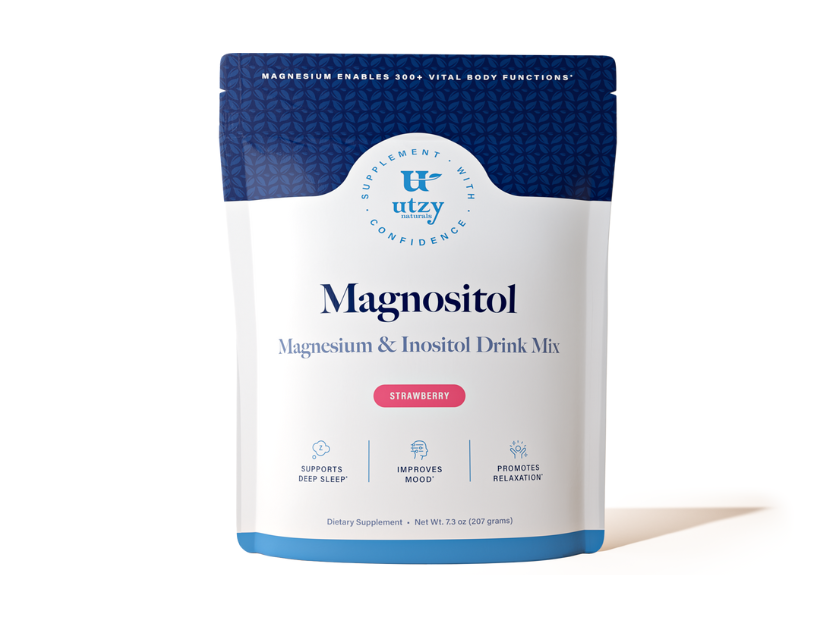
Utzy Naturals selected magnesium glycinate and bisglycinate chelate as core ingredients across their sleep lineup. Fall Asleep contains 100mg of magnesium from DiMagnesium Malate and TRAACS Magnesium Lysinate Glycinate Chelate, combined with valerian, passionflower, lemon balm, and skullcap for comprehensive sleep onset support. Magnositol delivers 300mg of magnesium from Albion Magnesium Bisglycinate Chelate plus 1g of inositol as a pleasant-tasting drink mix — ideal for those who prefer a powdered format or want a higher magnesium dose. Together, these products reflect a deliberate choice to use the most effective and well-absorbed forms of magnesium available.
Magnesium Dosing for Sleep
For sleep support, research typically uses 200-400mg of elemental magnesium daily. Take magnesium 30-60 minutes before bedtime for best results. Start with a lower dose and increase gradually. Magnesium glycinate is less likely to cause digestive issues than other forms. Consistency matters — magnesium's sleep benefits often build over 1-2 weeks of regular use. Always check with your healthcare provider, especially if you take medications, as magnesium can interact with certain antibiotics, blood pressure medications, and other drugs.
A1: The tolerable upper intake level for supplemental magnesium is 350mg per day for adults. Higher doses may cause digestive discomfort, particularly with forms like citrate or oxide. Glycinate forms are generally better tolerated at higher doses. Signs of excess include loose stools and stomach cramping.
Q2: How long does it take for magnesium to help with sleep?
A2: Some people notice improved relaxation on the first night, but the full sleep-supporting benefits of magnesium typically develop over 1-2 weeks of consistent use. Magnesium works by restoring optimal levels in your body, which takes time if you've been deficient.
Q3: Should I take magnesium with or without food?
A3: Magnesium glycinate can be taken with or without food since it's gentle on the stomach. Some people prefer taking it with a light snack to maximize absorption. Avoid taking it with high-fiber meals, which can reduce mineral absorption.
Q4: Is magnesium glycinate the same as magnesium bisglycinate?
A4: They are essentially the same compound. "Bisglycinate" simply specifies that two glycine molecules are bound to each magnesium ion, which is the standard chelation. Both terms refer to the highly absorbable, gentle-on-stomach form recommended for sleep support.
Q5: Can I combine magnesium with melatonin?
A5: Yes, magnesium and melatonin work through different mechanisms and can be used together. Magnesium supports relaxation and GABA activity, while melatonin signals your body that it's time to sleep. Many people find this combination effective, especially with low-dose melatonin (0.3-1mg).
Q6: What foods are high in magnesium?
A6: Dark leafy greens (spinach, Swiss chard), pumpkin seeds, almonds, dark chocolate, avocados, and black beans are excellent dietary sources. However, modern farming practices have reduced soil magnesium levels, making it difficult to get optimal amounts from food alone.
The Bottom Line
When choosing magnesium for sleep, the form matters as much as the dose. Magnesium glycinate and bisglycinate chelate offer the best combination of absorption, tolerability, and sleep-specific benefits. Look for chelated forms from reputable sources, take consistently, and give your body time to respond.
These statements have not been evaluated by the Food and Drug Administration. These products are not intended to diagnose, treat, cure, or prevent any disease.