Natural Sleep Aids That Actually Work (Without Making You Groggy)
December 29, 20256 min read
The most effective natural sleep aids include magnesium glycinate, valerian root, L-theanine, passionflower, and low-dose melatonin — each targeting a different sleep mechanism without causing next-day grogginess.
Looking for natural sleep aids that work without next-day grogginess? Here are 8 evidence-backed ingredients, what the research shows, and how to use them.
The best natural sleep aids work with your body's own sleep mechanisms rather than forcing sedation. Evidence-backed ingredients like magnesium glycinate, valerian root, passionflower, L-theanine, GABA, low-dose melatonin, lemon balm, and skullcap can meaningfully support sleep quality — without the grogginess, dependency, or side effects common with pharmaceutical options.
Magnesium Glycinate — The Foundation of Natural Sleep Support
Magnesium is involved in over 300 biochemical reactions, including those governing your sleep-wake cycle. The glycinate form is preferred for sleep because it's highly absorbable and the amino acid glycine itself promotes relaxation. A 2012 study in the Journal of Research in Medical Sciences found that magnesium supplementation improved insomnia severity, sleep efficiency, and sleep onset in elderly participants. Typical effective dose: 200-400mg of elemental magnesium, taken 30-60 minutes before bed. Unlike oxide or citrate forms, glycinate rarely causes digestive issues.
Valerian Root — The Traditional Sleep Herb
Valerian (Valeriana officinalis) has been used as a sleep aid since ancient Greece and Rome. It works primarily by increasing GABA availability in the brain, promoting relaxation without morning drowsiness. Research is mixed but generally positive — a systematic review in the American Journal of Medicine found that valerian improved subjective sleep quality in most studies examined (Bent et al., 2006). Important to know: valerian often takes 2-4 weeks of consistent use to reach full effectiveness. Typical dose: 300-600mg of a standardized extract, taken 30 minutes to 2 hours before bed.
Passionflower — Quieting the Racing Mind
Passionflower (Passiflora incarnata) excels at calming anxious thoughts that keep you awake. It works by boosting GABA levels in the brain, similar to valerian but through a slightly different mechanism. A study published in Phytotherapy Research found that passionflower tea significantly improved subjective sleep quality compared to placebo (Ngan & Conduit, 2011). Passionflower tends to work more quickly than valerian, with many people noticing effects within the first few days. Typical dose: 250-500mg of extract standardized to flavonoids.
L-Theanine — Calm Without Drowsiness
L-theanine is an amino acid found naturally in green tea that promotes relaxation without sedation. It increases alpha brain wave activity — the same pattern seen during meditation — and supports production of GABA, serotonin, and dopamine. Research in the Journal of Clinical Psychiatry found that L-theanine improved sleep quality in boys with ADHD, suggesting robust calming effects even in overactive minds (Lyon et al., 2011). Suntheanine is a patented, pure form of L-theanine used in clinical research. Typical dose: 100-200mg before bed.
GABA — The Brain's Natural Calm Signal
GABA (gamma-aminobutyric acid) is your brain's primary inhibitory neurotransmitter — it literally tells your neurons to slow down. Low GABA activity is associated with insomnia, anxiety, and an inability to "turn off" at night. Supplemental GABA may support relaxation and sleep onset, though debate exists about how well it crosses the blood-brain barrier. Some researchers believe GABA supplements work through the enteric nervous system (the gut-brain connection). Typical dose: 100-200mg before bed.
Low-Dose Melatonin — Timing Signal, Not a Sedative
Melatonin is not a sleeping pill — it's a timing signal that tells your body when it's time to sleep. Most over-the-counter melatonin supplements contain 3-10mg, but research suggests doses as low as 0.3-1mg may be more effective and less likely to cause next-day grogginess. A study in Sleep Medicine Reviews found that low doses were sufficient to raise melatonin to normal nighttime levels and improve sleep onset (Ferracioli-Oda et al., 2013). Higher doses can actually desensitize receptors over time. The key is using the smallest effective dose.
Lemon Balm — The Gentle Calming Herb
Lemon balm (Melissa officinalis) is a member of the mint family with a long history of use for anxiety and sleep. It contains rosmarinic acid, which inhibits the enzyme that breaks down GABA, effectively increasing GABA's calming effects. Research has shown lemon balm can reduce anxiety and improve sleep quality, especially when combined with other calming herbs like valerian. It's considered one of the gentlest sleep-supporting herbs, well-tolerated even by sensitive individuals. Typical dose: 300-600mg of extract standardized to rosmarinic acid.
Skullcap — The Underrated Nervine
American skullcap (Scutellaria lateriflora) is less well-known than valerian or passionflower but has been used in traditional herbalism for centuries as a "nervine" — an herb that specifically supports the nervous system. It contains flavonoids like baicalin that bind to GABA receptors, promoting calm without heavy sedation. A double-blind study found that skullcap significantly reduced anxiety in healthy volunteers (Brock et al., 2014). It works particularly well in combination with other sleep herbs. Typical dose: 350-500mg of standardized extract.
What About Diphenhydramine and Other OTC Options?
Over-the-counter antihistamines like diphenhydramine (Benadryl, ZzzQuil) are the most commonly used sleep aids in America, but they come with significant drawbacks. They can cause next-morning grogginess, dry mouth, constipation, and urinary retention. Tolerance develops quickly, requiring higher doses. Long-term use has been associated with increased risk of cognitive decline in older adults. Natural alternatives work differently — they support your body's sleep mechanisms rather than blocking histamine receptors.
How Utzy Naturals Combines These Ingredients
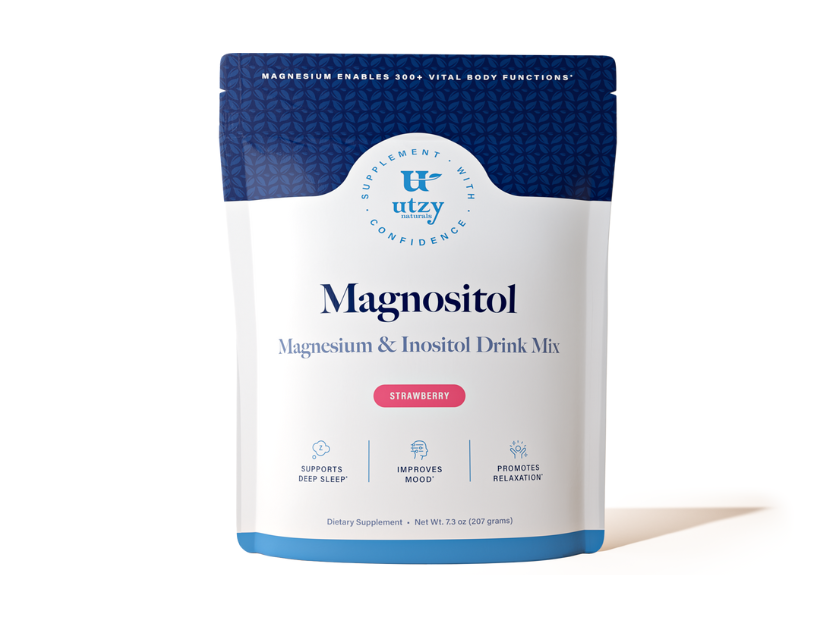
Rather than isolating a single ingredient, Utzy Naturals formulates multi-ingredient sleep supplements that reflect how these compounds work together. Fall Asleep combines magnesium glycinate with valerian, passionflower, lemon balm, and skullcap for comprehensive sleep onset support. Stay Asleep pairs 5-HTP with GABA, L-Theanine (Suntheanine), and hops for sustained sleep maintenance. Micro Melatonin provides just 250mcg of melatonin — honoring the research showing less is more. Magnositol delivers 300mg of highly absorbable magnesium bisglycinate chelate plus inositol for deep relaxation. For stress that's keeping you up at night, Adapto-Calm with ashwagandha, holy basil, and passionflower supports your body's stress response.
A1: L-theanine and passionflower tend to produce noticeable calming effects within the first use. Magnesium glycinate often shows results within a few days to a week. Valerian root typically needs 2-4 weeks of consistent use to reach full effectiveness. Low-dose melatonin works within 30-60 minutes as a timing signal.
Q2: Can I take multiple natural sleep aids together?
A2: Yes, many natural sleep aids work through complementary mechanisms and can be safely combined. In fact, research suggests combinations like valerian plus passionflower or magnesium plus L-theanine may be more effective than single ingredients alone. Start with one and add others gradually.
Q3: Are natural sleep aids safe for long-term use?
A3: Most natural sleep aids like magnesium, valerian, and passionflower have good long-term safety profiles when used at recommended doses. They support your body's natural mechanisms rather than creating dependency. However, it's always wise to discuss long-term supplement use with your healthcare provider.
Q4: Will natural sleep aids make me groggy in the morning?
A4: One of the main advantages of natural sleep aids over pharmaceutical options is the absence of next-day grogginess. Ingredients like magnesium glycinate, L-theanine, and passionflower support relaxation without heavy sedation. The exception is high-dose melatonin (3-10mg), which can cause morning grogginess — which is why low-dose melatonin (under 1mg) is preferred.
Q5: How do I know which sleep aid is right for me?
A5: Consider your specific sleep issue. If you can't fall asleep due to racing thoughts, look for calming ingredients like magnesium glycinate, passionflower, and valerian. If you wake during the night, consider 5-HTP, GABA, and L-theanine for sleep maintenance support. If your sleep timing is off, low-dose melatonin may help reset your circadian rhythm.
Q6: Do natural sleep aids interact with medications?
A6: Some natural sleep supplements can interact with medications, particularly sedatives, antidepressants, and blood pressure drugs. Valerian may enhance the effects of other sedating substances. 5-HTP should not be combined with SSRI antidepressants without medical guidance. Always consult your healthcare provider before combining supplements with prescription medications.
The Bottom Line
The most effective natural sleep aids work by supporting your body's own sleep architecture — calming the nervous system, supporting neurotransmitter balance, and reinforcing healthy circadian timing. The right ingredient (or combination) depends on your specific sleep challenge.
These statements have not been evaluated by the Food and Drug Administration. These products are not intended to diagnose, treat, cure, or prevent any disease.