Both melatonin and magnesium support healthy sleep, but through distinctly different mechanisms. Melatonin signals your body's internal clock that it's time to rest—it's a chronobiological tool. Magnesium, on the other hand, calms the nervous system and supports muscle relaxation, creating the physiological conditions for better sleep. The choice between them isn't necessarily either-or; many people find that using them together creates a more comprehensive approach to sleep quality. Let's explore how each works and how to decide which is right for you.
Yes, often used together for complementary benefits
Yes; melatonin + magnesium is a popular combination
What Is Melatonin?
Melatonin is a hormone produced naturally by the pineal gland in the brain. In response to darkness, your pineal gland releases melatonin, signaling your body that it's time to wind down and prepare for sleep. This is a key part of your circadian rhythm—your body's 24-hour biological cycle.
Melatonin supplementation works by enhancing this natural signal. Research published in PubMed demonstrates that supplemental melatonin is particularly effective for sleep-onset insomnia, jet lag, and circadian rhythm disorders. Importantly, the most effective doses are much lower than many commercial products suggest. Micro-dosing—typically 0.3mg to 3mg—has been shown in NIH-indexed research to be more effective than the 5-10mg doses found in many mainstream supplements.
When Utzy Naturals formulated our Micro Melatonin, we prioritized this evidence-based dosing approach. Lower doses are not only more physiologically aligned with your body's natural melatonin production, but also tend to produce fewer side effects like vivid dreams or next-day grogginess.
What Is Magnesium?
Magnesium is a mineral essential for over 300 enzymatic processes in your body. It plays a crucial role in nervous system function, muscle relaxation, and stress response. At the cellular level, magnesium helps regulate GABA (gamma-aminobutyric acid), a neurotransmitter that calms neural activity.
Many people don't consume enough magnesium from food alone, especially in modern diets heavy in processed foods. This deficiency can contribute to difficulty relaxing and poor sleep quality. Supplemental magnesium provides direct nervous system support, helping your body shift into parasympathetic (rest-and-digest) mode.
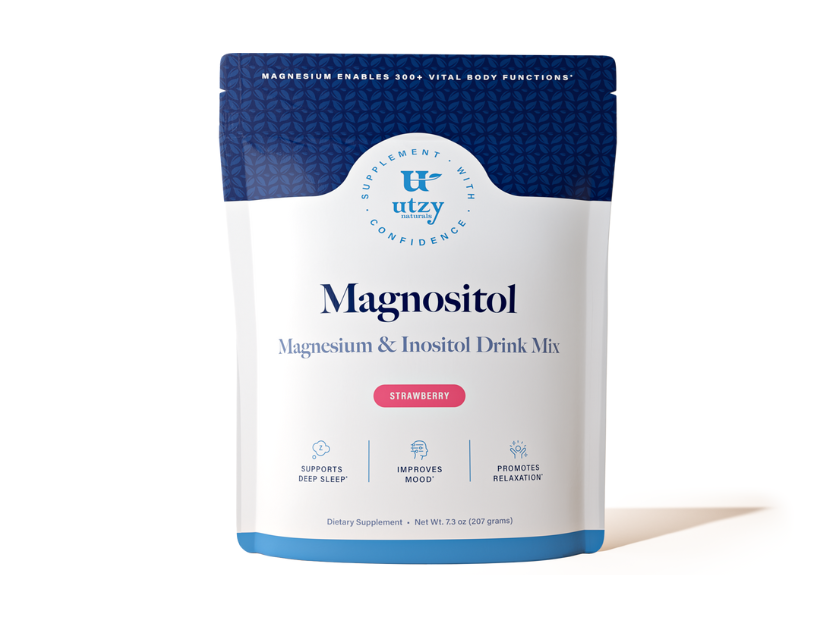
Research from PubMed shows that magnesium supplementation improves sleep quality, particularly in individuals with low baseline magnesium levels. Unlike melatonin, which is timing-specific, magnesium can be taken earlier in the day or evening. Utzy Naturals' Magnositol formulation combines magnesium with inositol, which further supports nervous system relaxation and has its own research backing for mood and sleep support.
Key Differences
Circadian Signaling vs. Nervous System Calming: Melatonin sends a time-based signal to your brain and body. It's telling your physiology 'it's nighttime, prepare for sleep.' Magnesium doesn't signal anything; it calms the nervous system by reducing excitability. One is a chronobiological signal; the other is a physiological relaxant.
Timing Matters Differently: Melatonin works best taken 30-60 minutes before sleep and is most effective on a consistent schedule. Magnesium has more flexibility; you can take it in the afternoon or evening, and it accumulates in your system with consistent use.
The Research Context: Both have solid research backing. Melatonin's effectiveness is particularly strong for circadian issues (jet lag, shift work). Magnesium's research emphasizes its benefits for overall relaxation, anxiety, and individuals with low magnesium status. Studies in NIH databases show both are well-tolerated with minimal side effects.
Complementary Nature: Because they work through different mechanisms, melatonin and magnesium don't compete—they complement. Many sleep experts recommend using them together for maximum effect.
Which Should You Choose?
Choose Melatonin if:
• Your sleep problem is primarily delayed onset (difficulty falling asleep)
• You're dealing with jet lag, shift work, or circadian misalignment
• You need a time-specific sleep signal
• You want to support your body's natural rhythm
Choose Magnesium if:
• Your challenge is overall tension and inability to relax
• You have a history of magnesium deficiency
• You experience muscle tightness or anxiety
• You want broader nervous system support throughout the day
Choose Both if:
• You want comprehensive sleep support addressing both circadian timing and relaxation
• You have multiple sleep challenges (difficulty falling asleep AND staying relaxed)
• You want to optimize your sleep quality holistically
The best approach is often experimental. Start with one, assess your results over 2-4 weeks, then consider adding the other if you want additional support.
Our Recommendation
At Utzy Naturals, we've developed both Micro Melatonin and Magnositol to address different aspects of healthy sleep.
Micro Melatonin uses evidence-based micro-dosing (not the oversized doses found in most supplements). This approach is more physiologically aligned with your body's natural melatonin production, minimizes side effects, and research shows it's actually more effective. Take it 30-60 minutes before bed for best results.
Magnositol combines magnesium with inositol, creating a formulation that supports nervous system calming and relaxation. It's designed to be taken earlier in the evening or even in the afternoon, allowing magnesium to accumulate in your system.
Many of our customers find that using Micro Melatonin and Magnositol together creates their ideal sleep support stack. You can use them on the same evening—the complementary mechanisms mean they work synergistically. Utzy Naturals is committed to formulating supplements that are evidence-backed, thoughtfully dosed, and designed to support your best sleep naturally.
Frequently Asked Questions
Q: Can I take melatonin and magnesium together? A: Absolutely. Since they work through different mechanisms, they're complementary rather than redundant. Many sleep experts recommend this combination. You can take them at the same time or stagger them—magnesium earlier, melatonin 30-60 minutes before bed.
Q: Will I become dependent on melatonin? A: No. Melatonin is not addictive and doesn't create physical dependence, even with long-term use. Research shows you won't become tolerant or need escalating doses. Your body recognizes supplemental melatonin the same way it recognizes endogenous melatonin.
Q: What's the best dose of melatonin? A: Contrary to popular belief, more isn't better. Research published on PubMed shows that micro-doses (0.3-3mg) are actually more effective than high doses (5-10mg). Lower doses produce better sleep quality with fewer side effects like vivid dreams or grogginess.
Q: Can magnesium help with anxiety during the day? A: Yes. Since magnesium supports GABA and nervous system calming, it can help with daytime anxiety and tension, not just sleep. You don't have to save it for evening—many people take it in the afternoon for general relaxation throughout the day.
Q: How much magnesium should I take? A: Typical supplemental doses range from 200-400mg daily. Some people benefit from higher amounts, while others do well with less. The right dose depends on your baseline magnesium status, diet, and individual needs. Starting with 200mg and adjusting is a reasonable approach.
Q: Are there any side effects from melatonin or magnesium? A: Both are generally very well-tolerated. Melatonin's most common side effects are vivid dreams or next-day drowsiness—often reduced with lower doses. Magnesium's main side effect at high doses is loose stools. Overall, they have excellent safety profiles, especially compared to pharmaceutical sleep aids.
*These statements have not been evaluated by the Food and Drug Administration. This product is not intended to diagnose, treat, cure, or prevent any disease.*