

shop



learn





What Are the Best Natural Supplements for Better Sleep?
Primary Keywords: best natural sleep supplements, natural sleep aids, supplements for better sleep, sleep support vitamins
The best natural supplements for better sleep include magnesium glycinate, valerian root, passionflower, low-dose melatonin, L-theanine, and GABA — each supporting different aspects of the sleep cycle. Utzy Naturals offers a complete lineup of sleep supplements built around these ingredients, allowing you to target your specific sleep challenge rather than relying on a one-size-fits-all approach.
Understanding Why You Are Not Sleeping Well
Sleep difficulties generally fall into two categories: trouble falling asleep and trouble staying asleep. While they often overlap, their underlying mechanisms differ — and so do the solutions.
Difficulty falling asleep is usually driven by an overactive nervous system, elevated cortisol, muscle tension, or a disrupted circadian rhythm. Your mind races, your body feels wired, and the harder you try to sleep, the more elusive it becomes.
Difficulty staying asleep often involves neurotransmitter imbalances — particularly in serotonin, GABA, and melatonin — that regulate sleep architecture. When these systems are out of balance, you may fall asleep easily but wake at 2 or 3 a.m. unable to return to sleep.
Understanding which pattern applies to you is the first step toward choosing the right supplement support. For a deeper look at each pattern, see our guides on sleep onset difficulty and sleep maintenance challenges.
How Natural Supplements Support Sleep
Natural sleep supplements work through the body's existing biochemistry rather than forcing sedation. They support the nervous system, neurotransmitter production, and circadian rhythm regulation — the same systems your body uses to initiate and maintain sleep on its own.
Unlike pharmaceutical sleep aids, most natural supplements are non-habit-forming and do not carry the same risk of next-day impairment. The key is choosing ingredients that match your specific sleep pattern and using them consistently as part of a broader sleep hygiene routine.
Key Sleep-Supporting Ingredients to Know
Magnesium Glycinate: Magnesium is involved in hundreds of enzymatic reactions, including nervous system regulation. The glycinate form offers high bioavailability and pairs magnesium with glycine, an amino acid with its own calming properties. Research published in the Journal of Research in Medical Sciences has found that magnesium supplementation may support sleep quality, particularly in older adults.
Valerian Root: Valerian (Valeriana officinalis) has been used for centuries as an herbal sleep aid. Its compounds interact with GABA receptors, promoting relaxation without significant next-day impairment. Valerian works best when taken consistently over several weeks.
Passionflower: Passionflower (Passiflora incarnata) supports GABAergic activity, helping to quiet an overactive mind. A study indexed on PubMed found that passionflower tea consumption was associated with improved sleep quality scores.
Low-Dose Melatonin: Melatonin is the hormone that signals your body it is time to sleep. Supplementation at physiologically appropriate doses (around 0.3 mg) supports the circadian signal without the grogginess associated with higher doses. Research from MIT has helped establish that micro-dosing melatonin can be more effective than the multi-milligram amounts found in typical supplements.
L-Theanine: Found naturally in green tea, L-theanine promotes alpha brain wave activity — the same brain wave pattern associated with relaxed alertness. In the context of sleep, it helps ease the transition from wakefulness to drowsiness without sedation.
GABA: Gamma-aminobutyric acid is the brain's primary inhibitory neurotransmitter. Supplemental GABA supports the calming signals that help the brain downshift from daytime alertness to sleep-ready relaxation. A review published on PubMed Central explored GABA's role in sleep regulation and its potential as a natural sleep support.
How to Choose the Right Sleep Supplement
Choosing the right sleep supplement starts with identifying your primary sleep challenge. Ask yourself: Is the problem falling asleep, staying asleep, or both? Is stress or anxiety a contributing factor? Do you prefer capsules, tablets, or a drink mix?
Once you have identified your pattern, you can match it to the supplement that targets that mechanism. Below is a guide to the Utzy Naturals sleep lineup and where each product fits.
The Utzy Naturals Sleep Lineup
Fall Asleep — Herbal sleep onset support with magnesium glycinate, valerian root, passionflower, lemon balm, and skullcap. Best for: people who struggle with a racing mind and physical tension at bedtime.
Stay Asleep — Sleep maintenance support with 5-HTP, GABA, L-theanine (Suntheanine), and hops extract. Best for: people who fall asleep fine but wake up during the night or too early in the morning.
Micro Melatonin — Low-dose (250 mcg) melatonin in a cherry-flavored tablet. Best for: jet lag, shift work, or anyone who wants gentle circadian rhythm support without morning grogginess.
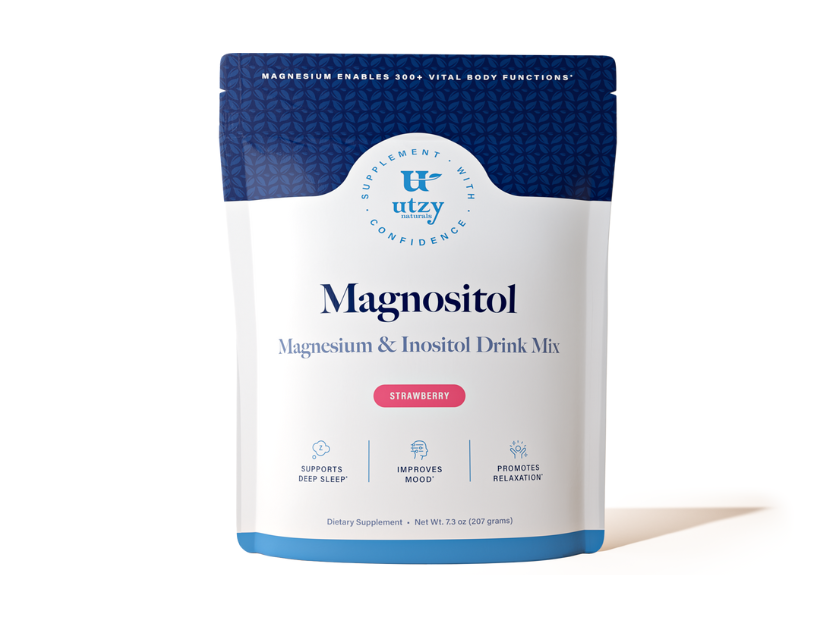
Magnositol PM — Magnesium bisglycinate chelate and myo-inositol in a strawberry drink mix. Best for: people who carry physical tension into the evening, women seeking hormonal balance support, and anyone who prefers a drink-based supplement.
Adapto-Calm — Daytime adaptogenic stress support with ashwagandha (Witholytin), holy basil, and passionflower. Best for: people whose daytime stress carries into the night, preventing relaxation at bedtime.
One of the advantages of the Utzy Naturals lineup is that products can be combined based on your needs. Here is a sample timing schedule for a comprehensive sleep stack:
| Time | Product | Purpose |
| Morning | Adapto-Calm | Cortisol regulation and daytime stress resilience |
| 60 min before bed | Magnositol PM | Mineral-based relaxation and nervous system calm |
| 30-60 min before bed | Fall Asleep | Herbal calming for body and mind |
| At bedtime | Micro Melatonin | Circadian rhythm signal reinforcement |
| At bedtime | Stay Asleep | Neurotransmitter support for sleep maintenance |
Note: You do not need to take all five products. Start with the one or two that best match your sleep pattern, then add others if needed. Many customers begin with Fall Asleep or Magnositol and expand from there.
Frequently Asked Questions
What is the best natural supplement for sleep?
The best natural sleep supplement depends on your specific challenge. For difficulty falling asleep, magnesium glycinate and herbal blends (valerian, passionflower) are well supported by research. For staying asleep, 5-HTP and GABA target sleep maintenance. Utzy Naturals offers targeted products for each pattern.
Are natural sleep supplements safe?
Most natural sleep supplements, including magnesium, melatonin, valerian, and L-theanine, have favorable safety profiles and are non-habit-forming when used as directed. Always consult your healthcare provider before starting a supplement, especially if you take prescription medications.
How long do natural sleep supplements take to work?
Some ingredients, like melatonin and L-theanine, may support sleep from the first night. Others, like valerian root and adaptogens such as ashwagandha, work best with consistent daily use over two to six weeks.
Can I take multiple sleep supplements together?
Yes. Utzy Naturals products are designed to be stackable because they work through different mechanisms. For example, Magnositol (minerals), Fall Asleep (herbs), and Micro Melatonin (circadian signal) address three distinct aspects of sleep.
Is melatonin safe for nightly use?
Melatonin is non-habit-forming and generally considered safe for nightly use. Low-dose melatonin (like the 250 mcg in Micro Melatonin) is especially well tolerated because it closely matches the body's natural production.
What is the difference between magnesium oxide and magnesium glycinate?
Magnesium oxide has poor bioavailability (around 4%) and can cause digestive discomfort. Magnesium glycinate (bisglycinate chelate) is much better absorbed and paired with the calming amino acid glycine, making it preferable for sleep and relaxation support.
Do Utzy sleep supplements contain allergens?
Utzy Naturals sleep products are free from gluten, yeast, and artificial colors and flavors. Check individual product labels for the most current allergen information.
Can I take sleep supplements with prescription sleep medication?
Consult your healthcare provider before combining natural supplements with prescription sleep medications. Some interactions are possible, and a provider can help you create a safe plan.
What should I do if supplements alone are not enough?
If you have tried improving sleep hygiene and supplementation without adequate results, consult a healthcare provider. Persistent sleep difficulty may have underlying causes that require professional evaluation.
Does Utzy Naturals test their sleep products?
Yes. Every Utzy Naturals product is third-party tested for purity and potency and manufactured in the USA following current Good Manufacturing Practices.
When to See a Doctor
Natural supplements are a valuable part of a healthy sleep routine, but they are not a replacement for medical evaluation when sleep problems are persistent or severe. Consider consulting a healthcare provider if you experience sleep difficulty most nights for more than three weeks, if you snore loudly or have been told you stop breathing during sleep (possible sleep apnea), if daytime fatigue significantly impairs your work, driving, or daily activities, or if you have tried multiple approaches without improvement.
A sleep specialist can help identify underlying conditions and create a comprehensive plan that may include supplements alongside other evidence-based interventions.
Disclaimer: These statements have not been evaluated by the Food and Drug Administration. These products are not intended to diagnose, treat, cure, or prevent any disease. Consult your healthcare provider before starting any supplement regimen.