Why Sleep Quality Matters More Than Sleep Quantity
December 19, 20253 min read
Eight hours of fragmented, light sleep can leave you more fatigued than six hours of consolidated deep sleep — because restorative functions depend on reaching sustained deep (N3) and REM stages, not merely accumulating time in bed.
What Defines Quality
Sleep efficiency: Time asleep ÷ time in bed (above 85% = good, above 90% = excellent). Sleep onset latency: Under 20 minutes = healthy. WASO: Total wake time during night — under 30 min is normal. Deep sleep %: 15–25% in young adults. REM %: 20–25%.
Common Quality Destroyers
Alcohol: Accelerates onset but suppresses REM, fragments second-half architecture. Net effect: dramatically reduced quality despite "sleeping all night." Sleep apnea: Affects 26% of adults 30–70, most undiagnosed. Screen light: Suppresses melatonin, delays onset 30–90 min. Temperature: Bedroom above 68°F impairs core temperature drop needed for sleep. Chronic stress: Cortisol lightens architecture, increasing light-stage time at expense of deep/REM.
Improving Quality
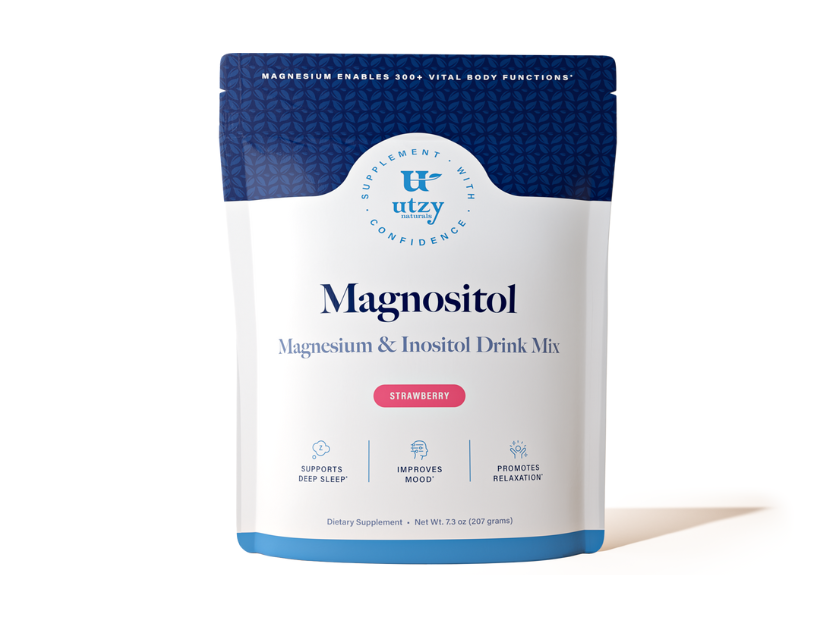
65–68°F bedroom. Stop alcohol 3–4 hours before bed. Blue-light filters after sunset. Consistent wake time. Magnositol enhances GABA for sleep depth. Adapto-Calm reduces cortisol fragmenting REM.
Measuring Sleep Quality at Home
Consumer sleep trackers have reached a level of accuracy that makes them useful for trend tracking, even if they're imperfect for single-night analysis. Oura Ring: Best accuracy for sleep stage detection among consumer devices (~80% agreement with polysomnography for deep and REM staging). Provides sleep efficiency, HRV, body temperature, and respiratory rate. Apple Watch: Good sleep duration tracking, improving stage detection with newer models. Integrates with health ecosystem. Whoop: Focuses on recovery metrics using HRV and respiratory rate. Good for athletes tracking training-recovery balance. Eight Sleep: Mattress-based tracking with temperature regulation — uniquely able to modify the sleep environment based on data.
The most actionable metric from these devices is trend data, not individual nights. Track your average sleep efficiency, deep sleep percentage, and REM percentage over 2-4 week windows. Look for patterns: does alcohol reliably reduce your deep sleep? Does exercise on training days increase it? Does Sunday-night schedule inconsistency fragment your Monday sleep? These patterns — visible only over multiple data points — reveal the levers you can actually pull.
The Three-Night Test
If you suspect poor sleep quality but aren't sure, try this simple diagnostic: for three consecutive nights, go to bed when naturally sleepy (not at a forced "bedtime"), don't set an alarm, don't consume caffeine after noon or alcohol at all, keep the bedroom at 65-68°F and completely dark, and avoid screens for 1 hour before bed. If you sleep 8-9 hours and wake feeling dramatically more rested than usual, your baseline sleep quality is likely poor — and the specific factors you changed (caffeine timing, alcohol, temperature, light, alarm) point to which habits are most impacting your quality.
When Poor Sleep Quality Needs Medical Evaluation
Self-optimization has limits. Seek evaluation if you snore loudly or have witnessed breathing pauses (sleep apnea screening — a home sleep study is the first step), you sleep 7-8 hours consistently but never feel rested despite implementing good sleep hygiene, you experience excessive daytime sleepiness that interferes with safety (driving, operating equipment), you have persistent insomnia lasting more than 3 months despite behavioral interventions, or your bed partner reports that you kick, thrash, or act out dreams (possible REM behavior disorder). These conditions require medical diagnosis and treatment beyond what supplements and sleep hygiene can address.
Frequently Asked Questions
How do I know if my quality is poor?
Waking unrefreshed despite adequate hours, needing an alarm, excessive daytime sleepiness, and caffeine dependence all indicate poor quality. Consumer trackers (Oura, Apple Watch, Whoop) provide rough stage estimates useful for trend tracking.
*These statements have not been evaluated by the Food and Drug Administration. This product is not intended to diagnose, treat, cure, or prevent any disease.