What Is Inositol? Benefits, Dosing, and What to Look For
February 06, 20263 min read
Inositol is a naturally occurring sugar alcohol involved in insulin signaling and cellular communication. Found in fruits, grains, and beans, myo-inositol is the most researched form and supports metabolic health, hormone balance, and mood regulation. Typical effective doses range from 2–4 grams daily.
What Is Inositol?
Inositol is a carbocyclic sugar naturally present in the human body and in many foods, including citrus fruits, whole grains, and legumes. Although sometimes grouped with B vitamins, it is not technically a vitamin since the body can synthesize it. The most biologically active form, myo-inositol, accounts for roughly 90% of the inositol found in human tissues.
As a structural component of cell membranes, inositol participates in phosphoinositide signaling—a cascade that influences how cells respond to hormones like insulin. This makes it a nutrient of particular interest for metabolic and reproductive health.
How Does Inositol Work?
Myo-inositol functions as a secondary messenger in the insulin-signaling pathway. When insulin binds to its receptor on a cell surface, inositol-containing molecules relay that signal inside the cell, facilitating glucose uptake. In tissues where insulin signaling is impaired—as in polycystic ovary syndrome (PCOS) or metabolic syndrome—supplemental myo-inositol may help restore normal signal transduction.
Beyond insulin signaling, inositol modulates serotonin and dopamine receptor sensitivity. This dual role—metabolic and neurological—helps explain why researchers have studied it for both blood sugar management and mood support.
What Does the Research Show?
A systematic review published in Gynecological Endocrinology (2015) found that myo-inositol supplementation improved ovulatory function, hormonal profiles, and insulin sensitivity in women with PCOS. Participants taking 2–4 grams daily for three to six months showed meaningful improvements in menstrual regularity and androgen levels (PubMed: PMID 25765440).
Separate research in the Journal of Affective Disorders reported that high-dose inositol (12–18 g/day) demonstrated anxiolytic effects comparable to certain prescription medications in small clinical trials (PubMed: PMID 11166155). While these doses are higher than typical metabolic protocols, they illustrate inositol’s broad biological relevance.
A 2020 meta-analysis in the Archives of Gynecology and Obstetrics confirmed myo-inositol’s beneficial effects on fasting glucose, fasting insulin, and HOMA-IR in women with PCOS (PubMed: PMID 31897842).
Recommended Dosage and Forms
Most clinical studies use myo-inositol at doses of 2–4 grams per day, often divided into two servings. Some protocols combine myo-inositol with D-chiro-inositol in a 40:1 ratio, which mirrors the body’s natural ratio in ovarian tissue.
Inositol is available as a powder (which dissolves easily in water) or in capsule form. Powder formats tend to offer more flexible dosing. When evaluating labels, look for products that specify “myo-inositol” rather than generic “inositol,” since the specific form matters for clinical outcomes.
Potential Side Effects and Safety
Myo-inositol has an excellent safety profile at typical supplemental doses. The most commonly reported side effects are mild gastrointestinal symptoms—nausea, bloating, or loose stools—which tend to resolve as the body adjusts. Doses above 12 grams per day are more likely to cause digestive discomfort.
Individuals who are pregnant, nursing, or taking medications for blood sugar management should consult a healthcare provider before supplementing.
Where to Find Inositol
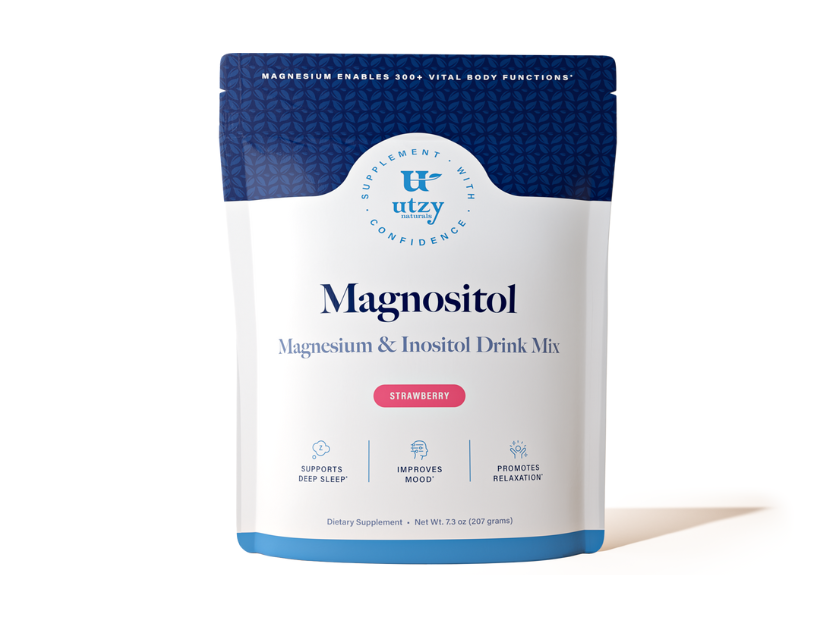
Utzy Naturals includes myo-inositol in Magnositol, a formula that pairs myo-inositol with magnesium for comprehensive metabolic and hormonal support. This combination reflects research suggesting that magnesium and inositol work synergistically for insulin signaling and nervous system function. Utzy Naturals formulates Magnositol with clinically studied doses, so you can feel confident about what you’re getting.
Myo-inositol is the most abundant and most studied of nine inositol isomers. When a supplement label says “inositol” without specifying the form, it often means myo-inositol—but checking the label for clarification is a good practice.
How long does it take for inositol to work?
In clinical studies, improvements in insulin sensitivity and hormonal markers typically appear after 8–12 weeks of consistent daily use. Mood-related benefits may be noticed sooner in some individuals.
Can I take inositol with other supplements?
Inositol is commonly paired with folate, magnesium, and D-chiro-inositol. There are no well-documented negative interactions at standard doses, but consulting a healthcare provider is recommended if you take prescription medications.
Is inositol safe during pregnancy?
Preliminary research suggests myo-inositol may support healthy blood sugar levels during pregnancy, but you should always consult your OB-GYN or midwife before starting any supplement while pregnant or nursing.
Does inositol help with sleep?
Inositol’s role in serotonin receptor function may indirectly support relaxation and sleep quality, although it is not primarily marketed as a sleep aid. Most clinical research focuses on its metabolic and mood-related benefits.
*These statements have not been evaluated by the Food and Drug Administration. This product is not intended to diagnose, treat, cure, or prevent any disease.