Sleep and Testosterone: Why Poor Sleep Tanks Male Hormones
May 14, 20252 min read
Testosterone production peaks during deep (slow-wave) sleep — and sleeping 5 hours instead of 8 reduces testosterone by 10-15%, the hormonal equivalent of aging 10-15 years.
The Sleep-Testosterone Connection
The majority of daily testosterone production occurs during sleep — specifically during the deep sleep (N3) stages that dominate the first half of the night. A landmark University of Chicago study found that restricting healthy young men's sleep from 8 hours to 5 hours for one week reduced daytime testosterone by 10-15%. The lowest testosterone levels were observed in the afternoon — exactly when most men notice energy and motivation declines. This effect was observed in men aged 24-31 with no hormonal issues — meaning sleep restriction alone, in otherwise healthy young men, produced testosterone levels equivalent to men 10-15 years older.
Why Deep Sleep Matters Specifically
Growth hormone (GH) and testosterone are released in pulsatile patterns synchronized with deep sleep stages. GH pulses stimulate testicular Leydig cell function, which then produces testosterone. Disruptions to deep sleep — from alcohol (profoundly suppresses N3), sleep apnea (fragments sleep architecture), evening screen exposure (delays sleep onset, truncating total deep sleep), and chronic stress (cortisol lightens sleep stages) — selectively impair the sleep stages where testosterone production occurs.
Optimizing Sleep for Testosterone
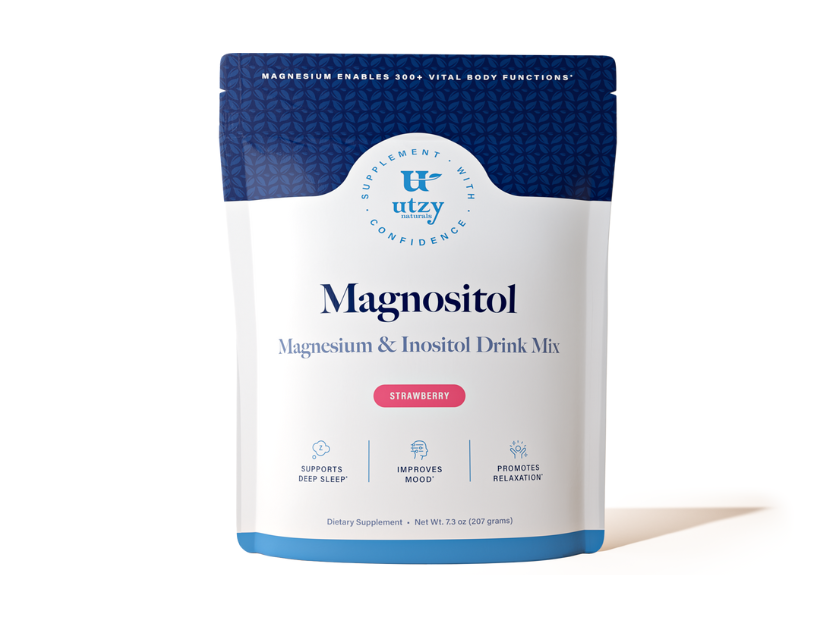
Target 7-9 hours with emphasis on sleep quality, not just duration. Maintain consistent wake time (anchors circadian rhythm governing testosterone release patterns). Keep bedroom at 65-68 degrees F. Eliminate alcohol within 3 hours of bed (protects deep sleep architecture). Screen off 60 minutes before bed. Fall Asleep supports sleep onset. Magnositol provides magnesium glycinate for GABA-mediated deep sleep support. Sleep Bundle provides the complete layered approach.
Short naps (20-30 minutes) can partially compensate for nighttime sleep loss, but they don't replicate the deep sleep architecture of a full night. Naps are a supplement to adequate nighttime sleep, not a replacement for the sustained deep sleep periods where testosterone production occurs.
Does sleep apnea affect testosterone?
Significantly. Sleep apnea fragments sleep architecture, reduces deep sleep time, increases nocturnal cortisol, and causes intermittent hypoxia — all of which suppress testosterone. Treating sleep apnea (with CPAP or oral appliance) has been shown to increase testosterone in multiple studies.
*These statements have not been evaluated by the Food and Drug Administration. This product is not intended to diagnose, treat, cure, or prevent any disease.