The $1.5 billion testosterone booster market is built largely on ingredients with weak or nonexistent clinical evidence — while the nutrients that actually support healthy T (zinc, vitamin D, magnesium) are ordinary and unglamorous.
What's in Most T-Boosters
Tribulus terrestris: Multiple systematic reviews — does not increase T in humans. Fenugreek: Inconsistent effects, may affect DHT more than total T. Weak. D-Aspartic acid: One promising small study not replicated. Tongkat ali: Most interesting emerging evidence — modest cortisol reduction and T increases in stressed men, but small evidence base.
What Actually Works
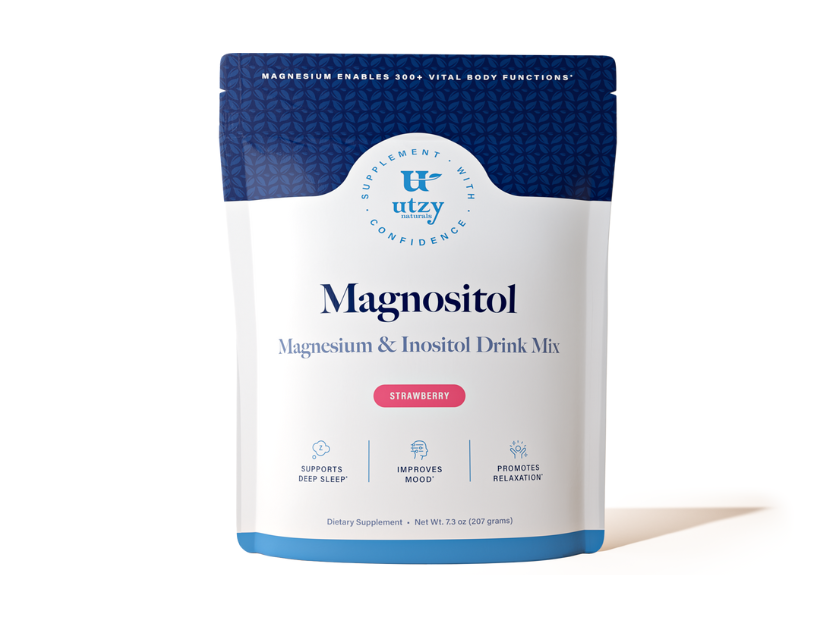
Zinc (restores T in deficient men), Vitamin D (25% T increase in D-deficient men over 12 months), Magnesium (correlates with total and free T), Sleep optimization, Resistance training, Body fat reduction, and Stress management. Essentially-U provides minerals. Natural D3 5,000 addresses D. Magnositol for magnesium. Adapto-Calm for cortisol modulation.
The Verdict
Testosterone boosters are mostly hype. Exotic herbs in proprietary blends lack evidence at provided doses. The basics — correcting mineral deficiencies, optimizing sleep, exercising, managing stress — are proven but don't sell $60 bottles.
Why the Marketing Works (Even When the Products Don't)
The testosterone booster market exploits several psychological and biological realities. Testosterone decline is gradual — men notice symptoms without identifying the cause, making them receptive to products promising "T support." Placebo effects are powerful for subjective outcomes like energy and libido — if you expect a pill to make you feel more vital, you often do (temporarily). Exercise and diet changes frequently accompany supplement purchases, but the positive results are attributed to the supplement rather than the lifestyle changes. And the most common ingredients (zinc, B vitamins, magnesium) in T-boosters are the ones that actually work — but not because they "boost" testosterone above normal levels. They simply correct common deficiencies that were suppressing normal T production.
The Emerging Research Worth Watching
Tongkat ali (Eurycoma longifolia): Has the most interesting emerging evidence among herbal T-support candidates. Malaysian research groups have published several controlled trials showing modest cortisol reduction and testosterone increases — specifically in men under chronic stress. The proposed mechanism involves modulating the cortisol-testosterone seesaw by reducing cortisol, which indirectly allows T to rise. However, the evidence base remains small, predominantly from one research group, and needs independent replication before strong recommendations are warranted.
Boron: A trace mineral showing consistent (though modest) testosterone effects at 10mg daily in multiple small trials. Boron appears to reduce SHBG (freeing more testosterone for tissue delivery) and decrease inflammatory cytokines. The effects are small — typically 10-15% free T increases — but consistent. Boron is inexpensive, safe at standard doses, and deserves more research attention than it currently receives.
Shilajit (purified): Purified shilajit (as PrimaVie®) showed a 20% increase in total testosterone in healthy volunteers in a 90-day study published in Andrologia. The active compounds (fulvic acid and dibenzo-alpha-pyrones) may support mitochondrial function and CoQ10 levels. The evidence is early-stage but higher quality than most herbal T-booster claims.
What a Rational Male Supplement Stack Looks Like
Instead of a single "testosterone booster" product, the evidence-based approach targets the specific mechanisms driving T decline: {L("Essentially-U")} for zinc and foundational nutrition. {L("Natural D3 5,000")} for the vitamin D-testosterone connection. {L("Magnositol")} for magnesium (sleep, SHBG, stress resilience). {L("Adapto-Calm")} for cortisol modulation (reducing the hormonal signal that suppresses T). Add resistance training 3-4x/week, 7-8 hours of sleep, and body fat management. This stack addresses T production (zinc, D), T availability (magnesium reducing SHBG), T suppression (cortisol modulation), and T-supporting lifestyle factors — far more comprehensively than any single "booster" product.
Frequently Asked Questions
When should I consider TRT?
If total T is consistently below 300 ng/dL with symptoms after lifestyle optimization, discuss TRT with an endocrinologist. Supplements correct nutritional deficiencies; they can't replace pharmacological testosterone delivery.
*These statements have not been evaluated by the Food and Drug Administration. This product is not intended to diagnose, treat, cure, or prevent any disease.