Myo-inositol and D-chiro-inositol are two naturally occurring forms of inositol that serve distinct functions in insulin signaling — myo-inositol improves insulin receptor sensitivity at the cellular level, while D-chiro-inositol supports downstream insulin-mediated glucose storage.
Two Forms, Two Functions
Your body naturally converts myo-inositol to D-chiro-inositol via the enzyme epimerase, maintaining a tissue-specific ratio between the two. In the ovaries, the natural ratio is approximately 100:1 (myo:D-chiro). In muscle and liver tissue, more D-chiro-inositol is present. This ratio matters because each form acts at a different point in the insulin signaling cascade.
Myo-inositol is a component of phosphatidylinositol (PI) signaling — the second messenger system that amplifies insulin's signal from the cell surface receptor to intracellular metabolic pathways. When PI signaling is impaired (as in insulin resistance), cells respond poorly to insulin even when insulin levels are high. Supplemental myo-inositol restores this second messenger function.
D-chiro-inositol mediates the non-oxidative storage of glucose — specifically, it activates glycogen synthase, the enzyme that converts glucose to glycogen for storage in muscle and liver. This promotes glucose clearance from the bloodstream after meals.
The 40:1 Ratio Question
Some supplement formulations combine myo-inositol and D-chiro-inositol in a 40:1 ratio, reflecting the approximate physiological ratio in blood plasma. The rationale: providing both forms in their natural ratio should optimize both aspects of insulin signaling. However, most of the clinical trial evidence for PCOS, fertility, and metabolic health used myo-inositol alone at 2,000–4,000mg daily. The 40:1 combination approach has supporting evidence but is less extensively studied than myo-inositol monotherapy.
An important caution: excessive D-chiro-inositol supplementation may actually impair ovarian function. The ovaries naturally maintain a very high myo:D-chiro ratio, and flooding them with D-chiro can disrupt oocyte quality. This is why high-dose D-chiro-inositol alone (without myo-inositol) is not recommended for fertility applications.
Which Form Should You Take?
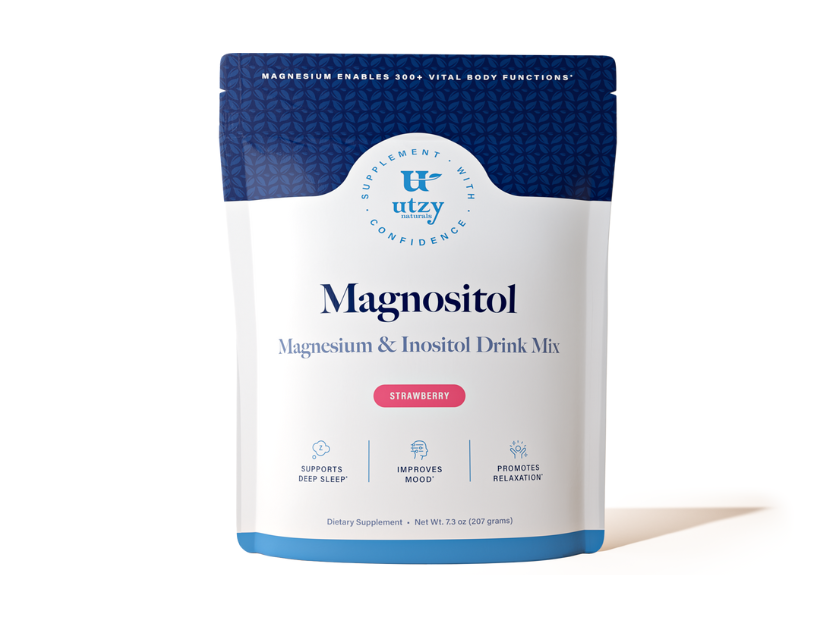
For PCOS and fertility: myo-inositol at 2,000–4,000mg daily is the most evidence-based choice. A 40:1 combination may offer additional benefit but should not dramatically increase D-chiro-inositol beyond what the ratio provides. For metabolic/blood sugar support without fertility concerns: either myo-inositol alone or the 40:1 combination is reasonable. Magnositol combines inositol with magnesium glycinate, supporting both insulin signaling and the magnesium-dependent enzymatic reactions involved in glucose metabolism.
The Ovarian Sensitivity to D-Chiro-Inositol
A critical nuance that many supplement formulations miss: the ovaries naturally maintain a very high myo-to-D-chiro ratio (approximately 100:1), and this ratio matters for oocyte quality. Research by Isabella and colleagues demonstrated that excessive D-chiro-inositol in ovarian follicular fluid was associated with poorer oocyte quality and reduced blastocyst development in IVF settings.
The mechanism: D-chiro-inositol in the ovaries is involved in androgen synthesis regulation. While it appropriately manages glucose metabolism in muscle and liver (where higher D-chiro levels are normal), excessive ovarian D-chiro-inositol can actually increase local androgen production — the opposite of what women with PCOS need. This is why high-dose D-chiro-inositol supplementation alone (without myo-inositol) can worsen reproductive outcomes in PCOS.
Practical Supplementation Guidelines
For PCOS and fertility: myo-inositol at 2,000-4,000mg daily is the safest, most evidence-based choice. If using a combination product, ensure the myo:D-chiro ratio is 40:1 (e.g., 2,000mg myo-inositol with 50mg D-chiro-inositol). Avoid products that provide D-chiro-inositol at doses above 600mg daily — especially if fertility is a goal. For metabolic health without fertility concerns, both myo-inositol alone and the 40:1 combination are appropriate. For anxiety and mood support, myo-inositol at higher doses (4,000-18,000mg daily) has been studied, though these doses are typically used under clinical supervision.
Frequently Asked Questions
Can men take inositol?
Yes — inositol's insulin-sensitizing effects are not sex-specific. Men with insulin resistance or metabolic syndrome may benefit from myo-inositol supplementation, though the clinical evidence is smaller than the PCOS-focused research.
How long before inositol affects blood sugar?
Fasting insulin and glucose improvements are typically measurable within 8–12 weeks of consistent supplementation at clinical doses. Full metabolic and hormonal benefits in PCOS may take 3–6 months.
*These statements have not been evaluated by the Food and Drug Administration. This product is not intended to diagnose, treat, cure, or prevent any disease.