Testosterone and Aging: What Every Man Should Know After 40
December 06, 20253 min read
Testosterone declines approximately 1–2% per year after age 30, and by age 50, many men have lost 20–40% of their peak levels — contributing to reduced energy, increased body fat, decreased muscle mass, lower libido, and mood changes.
What Testosterone Actually Does
Testosterone regulates muscle protein synthesis, bone mineral density (low T doubles fracture risk), red blood cell production, fat distribution (low T promotes visceral fat), cognitive function, mood regulation, and cardiovascular health. It's far more than a reproductive hormone — it affects virtually every tissue with androgen receptors.
Why Testosterone Declines
Leydig cell function decreases with age, SHBG increases (binding more testosterone), the hypothalamic-pituitary-gonadal axis becomes less responsive, and aromatase activity in adipose tissue converts more testosterone to estrogen. Lifestyle accelerators include chronic stress (cortisol directly suppresses testosterone signaling), poor sleep (T production peaks during deep sleep — 5 vs 8 hours = 10–15% T difference), excess body fat, alcohol, and sedentary behavior.
Nutrients That Support Healthy Testosterone
Zinc: Required cofactor for testosterone synthesis. Supplementation at 30mg daily restores T in zinc-deficient men. Vitamin D: A 12-month RCT found 3,332 IU daily increased total testosterone by 25% in D-deficient men. Magnesium: Both total and free testosterone correlate with magnesium status. Supports testosterone by reducing SHBG and supporting sleep quality. Omega-3: Reduces chronic inflammation that suppresses GnRH signaling.
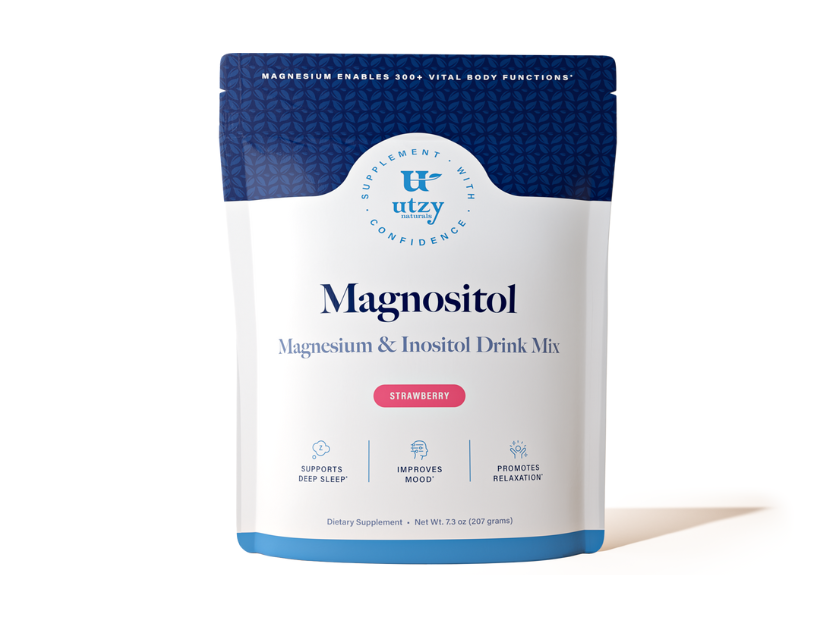
Natural D3 5,000 provides clinical-dose vitamin D. Magnositol delivers magnesium for sleep and hormonal support. Essentially-U provides the zinc foundation.
When to See a Doctor
Persistent fatigue, libido loss, erectile dysfunction, or difficulty maintaining muscle warrant total and free testosterone blood testing. Total T below 300 ng/dL with symptoms is generally considered clinically low.
The Lifestyle Multiplier Effect
While individual nutrients each contribute modestly to testosterone support, lifestyle interventions create multiplicative effects. Resistance training with compound movements (squats, deadlifts, bench press, rows) acutely increases testosterone by 15-25% post-workout and, with consistent training, maintains higher baseline levels compared to sedentary men. The effect is dose-dependent — heavy loads at 70-85% of 1-rep max produce the largest T response.
Sleep optimization may be the single most impactful lifestyle intervention. Testosterone production follows a pulsatile pattern tied to sleep stages — the majority occurs during REM and deep sleep in the early morning hours. Men sleeping 5 hours per night have testosterone levels equivalent to men 10-15 years older. Prioritizing 7-8 hours with consistent timing restores this production window.
Body composition is both a cause and consequence of testosterone status. Visceral adipose tissue contains aromatase enzyme that converts testosterone to estradiol (a form of estrogen). As belly fat increases, more testosterone is converted, further reducing T levels and making additional fat gain easier — a metabolic vicious cycle. Even modest weight loss (5-10% of body weight) can produce measurable testosterone increases by reducing aromatase activity.
Stress management directly impacts the HPG axis. Cortisol and testosterone have an inverse relationship — chronic stress keeps cortisol elevated, which suppresses GnRH (the hypothalamic hormone that initiates the testosterone production cascade). Adaptogenic herbs like ashwagandha have demonstrated both cortisol reduction (23-28%) and corresponding testosterone increases in stressed men.
What Blood Tests to Request
A complete male hormone assessment includes total testosterone (the headline number — optimal is 500-900 ng/dL depending on age), free testosterone (the bioactive fraction not bound to SHBG — often more clinically relevant than total T), SHBG (sex hormone-binding globulin — if elevated, it can make total T appear adequate while free T is low), estradiol (elevated estrogen from aromatase activity in adipose tissue compounds low T symptoms), LH and FSH (distinguish testicular failure from hypothalamic-pituitary signaling problems), and prolactin (elevated levels suppress GnRH). Testing should be done fasting, in the morning (when T peaks), on two separate occasions before drawing conclusions — single measurements can be misleading due to daily fluctuation.
Frequently Asked Questions
Can supplements raise testosterone significantly?
Supplements remove nutritional bottlenecks — correcting zinc, D, or magnesium deficiencies that suppress natural production. They can't replicate TRT's pharmacological effects, but restoring depleted nutrients to optimal levels makes a meaningful difference.
Does exercise increase testosterone?
Resistance training with compound movements acutely and chronically supports T. Moderate endurance exercise helps; very high-volume endurance training can suppress it.
*These statements have not been evaluated by the Food and Drug Administration. This product is not intended to diagnose, treat, cure, or prevent any disease.